Perry Design Review: Santa Cruz 63
The big sister to the 52 packs the same performance punch
This is the first Santa Cruz model not to have been designed from scratch by the wizard Bill Lee. This time the designer of record is Bob Smith, although Lee was retained as a consultant. I'm sure his hand is in evidence throughout this new design. Bob Smith might be a new name to some of you, but he has been involved with West Coast ULDB boats for years and knows the game well.
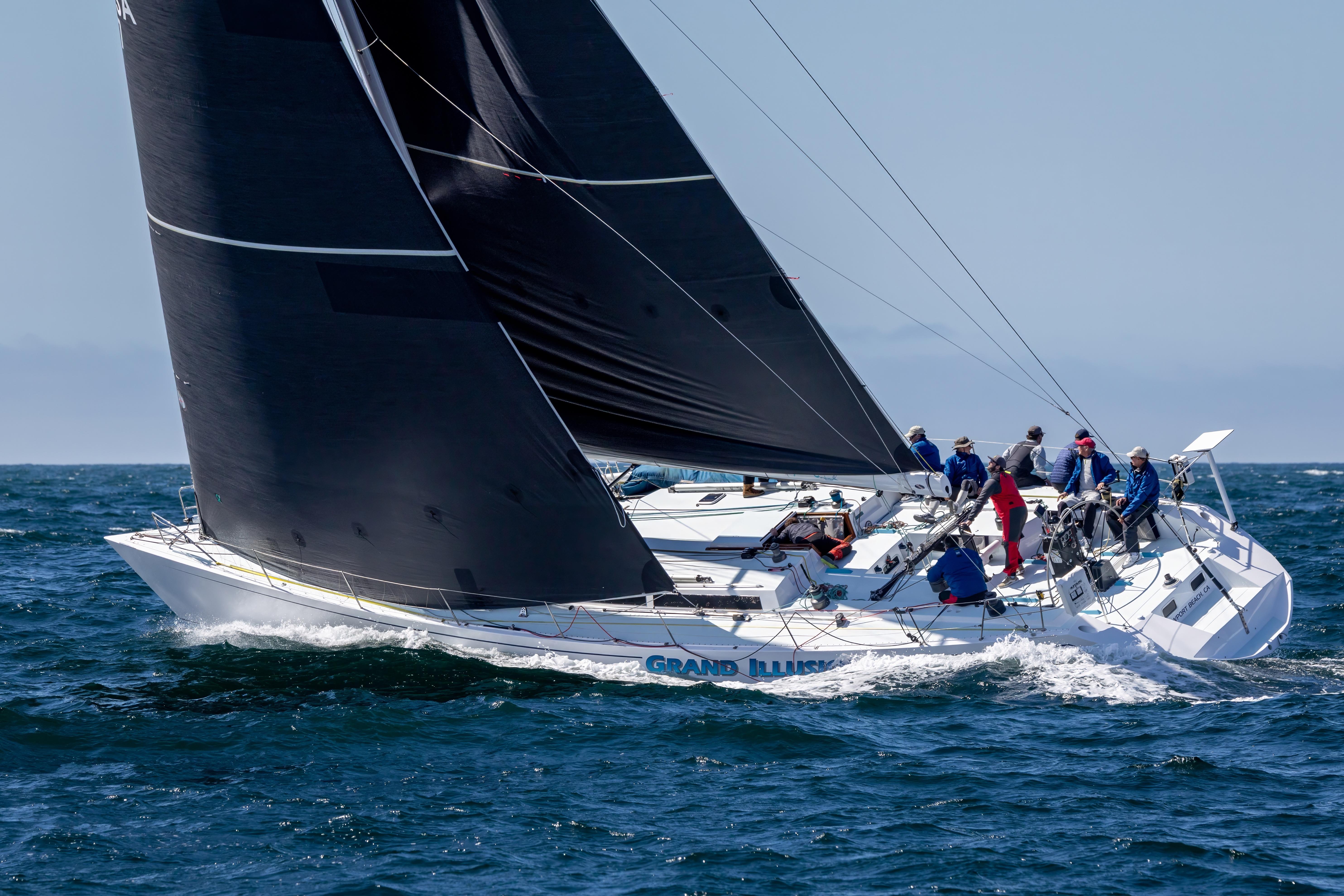
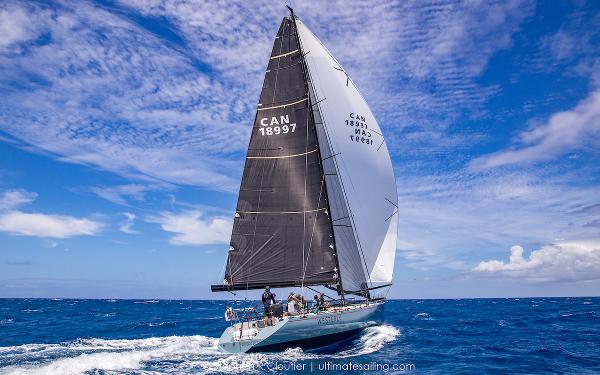
The new Santa Cruz 63 is based upon the same concept as the Santa Cruz 52. The new boat is big, light and strong, capable of racing with the best, and at the same time providing a pleasurable cruising experience. Looking at this interior layout, it is clear that a full racing version would be more simplified and lighter, but there is tremendous appeal to a boat that can do both. Today's building methods include lightweight materials that diminish the performance gap between racing and cruising.
The D/L ratio of this design is 93.41 at a realistic displacement of 32,640 pounds. Beam is moderately narrow with an L/B of 3.84. Draft is 9 feet, 1 inch, with a cast molded-steel fin with a lead bulb. The sheer looks flat, but there is a hint of spring there. Given the pedigree of this design there should be little question as to the performance potential.
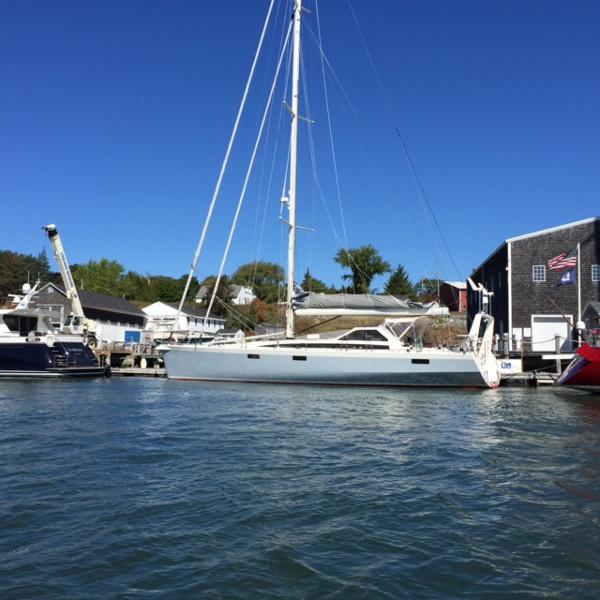
This rig is unusual in that it's a fractional rig without shrouds going to the hounds. The shrouds go to the masthead indicating that perhaps a masthead chute will be carried, although one is not shown on the drawings. There are no shrouds supporting the headstay, and given the strengths of a carbon-fiber mast (standard on the 63), this could be a problem. Note the inner forestay indicating that a cruising staysail might be carried. The bowsprit is not carried in a bow tube but proud, on deck. This has the advantage of being drier in a seaway and simpler to build. The shrouds are swept 17.5 degrees. The sheeting angle for the working jib to the track drawn is 11.5 degrees. I'd prefer to see 10 degrees. SA/D ratio is 27.6. Given the combined expertise of Bill Lee and Bob Smith, I suspect my reservations are unfounded.
This accommodation plan is nearly perfect in every way. Note the counter space on each side of the sinks. Yes! My hobby is cooking, and I know what it takes to make a galley work. There is a required flow pattern from sink to counter by way of trash bin to stove. There's no excuse in a 63-footer to not get all of this correct. This galley would be better if the reefer were moved to the centerline counter area. This way the prime counter space between the sinks and the range would not be interrupted by the reefer lid. Keep in mind that these boats will be built on a semi-custom basis. Your interior can be structured to your particular requirements.
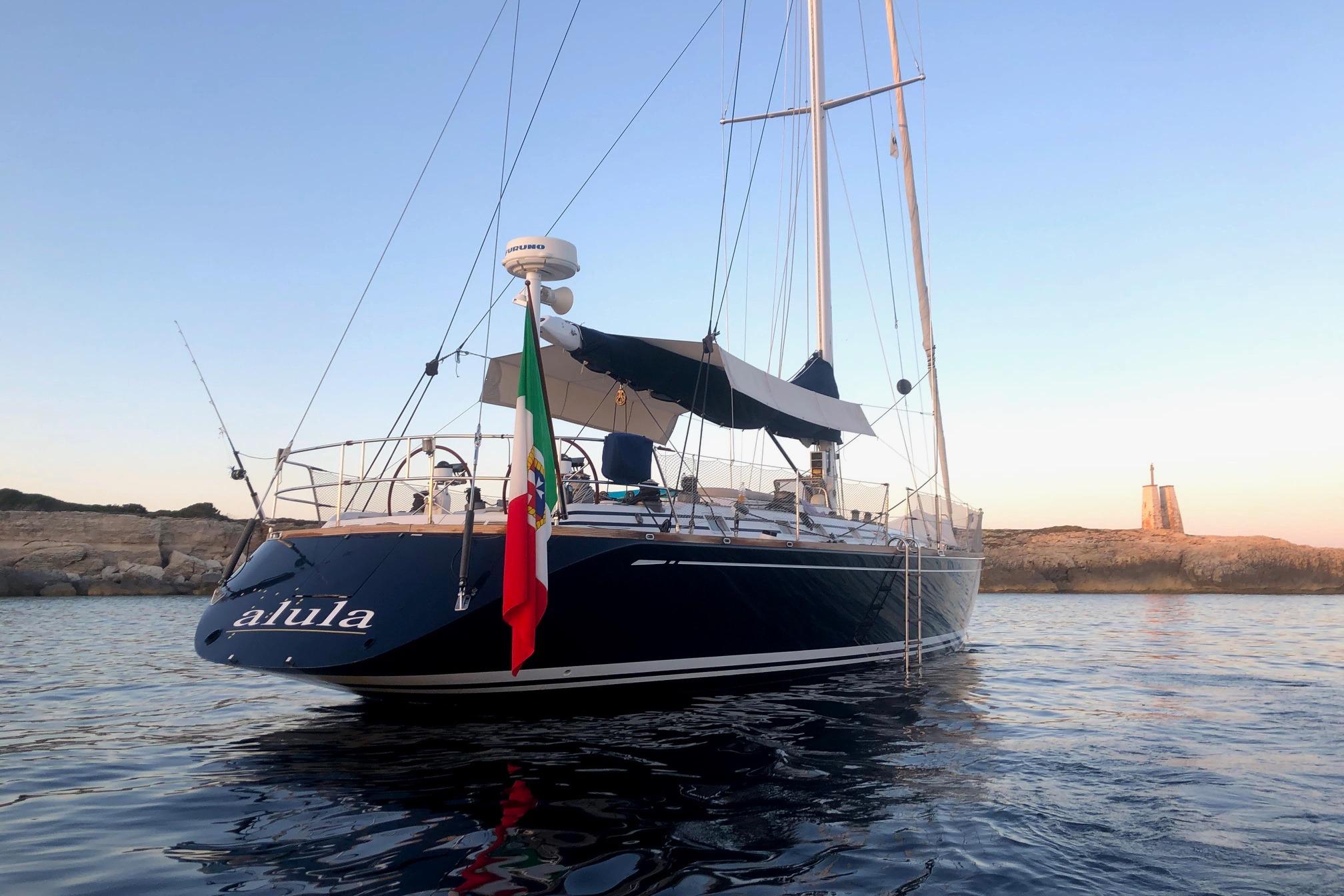
The huge cockpit and twin wheel layout will make this a fun boat to sail. Most cruising boats suffer from contracted cockpits. The short jib tracks keep the side decks clear. The cockpit seats are long enough to stretch out on for napping.
This is a well-put-together hybrid that offers the best of both worlds. It could, however, use a little more creative styling.
The big sister to the 52 packs the same performance punch.
Boat Specifications
| LOA | 63'1"; |
| DWL | 53'10"; |
| Beam | 16'5"; |
| Draft | 9'1"; |
| Displacement | 32,640 lbs.; |
| Sail Area | 1,763 sq. ft.; |
| SA/D ratio | 27.6; |
| D/L ratio | 93.41; |
| L/B | 3.84; |
| Fuel | 140 gals.; |
| Water | 140 gals. |
 This story originally appeared in Sailing Magazine, and is republished here by permission. Subscribe to Sailing.